Flora of Kolsay Kolderi National Park: Where Nature Heals, Feeds, and Remembers

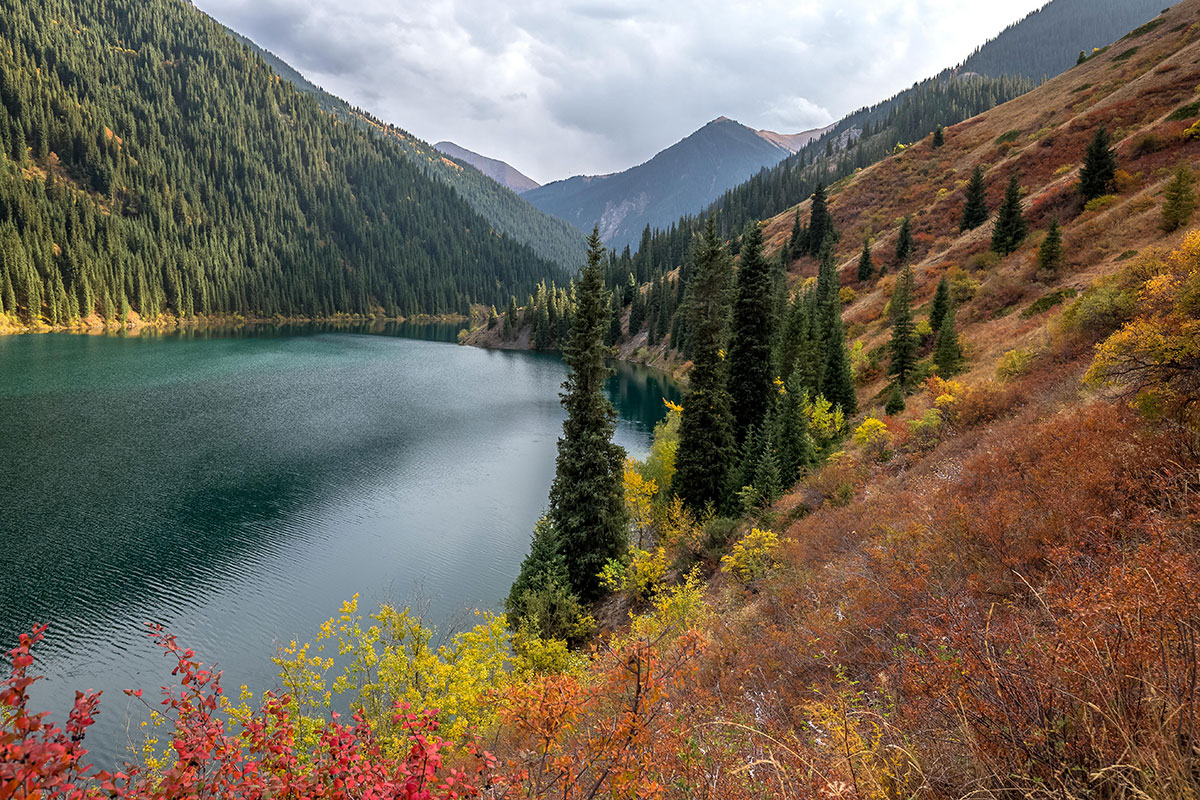
Kayindy lake
photo by Magzhan

Tucked deep in the northern Tian Shan mountains, Kolsay Kolderi National Park is often praised for its turquoise lakes and dramatic landscapes. Yet those who walk its trails slowly begin to notice something else — the quiet richness beneath their feet, along the slopes, and hidden in forest shade.

This is a land where plants are not simply decoration. They are medicine, food, shelter, and memory. For centuries, local people have relied on mountain flora for healing, nourishment, and spiritual balance. Even today, visitors unknowingly walk through a living natural pharmacy, shaped by altitude, climate, and tradition.

The flora of Kolsay is best understood not as a list of species, but as a vertical story — one that unfolds step by step as you move higher into the mountains.
A Landscape Written in Altitude

One of the most fascinating features of Kolsay’s plant world is vertical zoning. In just a few kilometers, the vegetation changes dramatically.

  • Lower slopes and valleys support grasses, shrubs, and berry plants

  • Mid-mountain zones are dominated by spruce forests and medicinal herbs

  • Upper elevations open into alpine meadows with short-lived but vivid flowering plants

  • Rocky ridges are home to hardy shrubs that survive wind, frost, and thin soil

Each zone supports different wildlife, creating a tightly connected ecosystem where plants are the foundation of life.

Tien Shan Spruce – Шренк шыршасы (Picea schrenkiana)

The dark green silhouette of the Tien Shan spruce defines the landscape around the Kolsay lakes. These forests feel ancient — quiet, cool, and protective.

Shrenk's spruse tree
photo by Magzhan

Why this tree matters

  • prevents landslides and soil erosion
  • regulates water flow into streams and lakes
  • provides shelter for birds, deer, and predators

Useful and traditional uses

Historically, spruce resin was used by locals as a natural antiseptic. Needles were brewed into infusions rich in vitamin C to fight fatigue during long winters. The air in spruce forests, filled with essential oils, is believed to ease breathing and calm the mind — something modern visitors still feel instinctively.

Many locals say: “The forest itself heals you.”

Juniper – Арша (Juniperus spp.): Sacred Smoke of the Mountains

archa - juniper
photo by alexey-kurilovich

No plant in Kolsay carries more cultural meaning than juniper.

Growing slowly on rocky slopes and high mountain terraces, juniper is tough, aromatic, and long-lived. For Kazakh people, it has always been more than a shrub.

How juniper is used in Kazakh tradition

  • Alastau (cleansing ritual): dried juniper branches are burned to purify homes, people, newborns, and travelers
  • Protection: smoke was believed to drive away illness, bad luck, and negative spirits
  • Healing: juniper smoke and infusions were used for respiratory problems and general weakness
Even today, many Kazakh families treat juniper with deep respect. Cutting it unnecessarily is traditionally avoided, and its scent instantly evokes the mountains.

Wild Strawberry – Жабайы құлпынай (Fragaria vesca)

Wild Strawberry – Жабайы құлпынай (Fragaria vesca)
photo by ani-rain

In early summer, the forest floor begins to sparkle with tiny red dots — wild strawberries, one of Kolsay’s sweetest gifts.

Unlike cultivated varieties, wild strawberries are small but incredibly aromatic. Their scent often reaches you before you see them.

Why wild strawberries are special

  • naturally rich in vitamin C and antioxidants
  • improve digestion and blood circulation
  • leaves are used in herbal teas

For hikers and locals alike, finding wild strawberries is a moment of quiet happiness. Children learn early how to spot them without damaging the plant — an unwritten rule of respect for nature.

Wild Raspberry – Таңқурай (Rubus idaeus)

Wild Raspberry – Таңқурай (Rubus idaeus)
photo by aditi-panatu

Along streams, forest edges, and sunny slopes grow wild raspberries — taller, more robust than strawberries, and vital to both humans and wildlife.

Ecological role

  • major summer food source for birds and bears
  • stabilizes soil along slopes and riverbanks
  • signals healthy, moist ground

Traditional use

Kazakh households have long used raspberry leaves and berries for:

  • treating colds and fever
  • boosting immunity
  • soothing teas for children and elders

A simple cup of wild raspberry tea remains one of the most trusted natural remedies in mountain villages.

Currants, Rosehip, and Mountain Shrubs

Beyond strawberries and raspberries, Kolsay is rich in wild shrubs that quietly support both health and biodiversity.

Rosehip – Итмұрын

Rosehip – Итмұрын
photo by mustafa-akin
  • extremely high in vitamin C
  • used in teas and syrups
  • strengthens immunity during cold seasons

Wild currants

wild currant
photo by bermix-studio
  • rich in antioxidants
  • eaten fresh or dried
  • important food source for birds
These shrubs thrive where forests meet open spaces, creating natural borders between ecosystems.

Alpine Meadows: Beauty That Lasts Only Weeks

Above the forest line, Kolsay transforms again. Alpine meadows explode with color — but only briefly.

Life in extreme conditions

  • plants grow low to avoid wind
  • leaves are thick to retain moisture
  • flowering happens quickly during short summers

Here grow gentians, buttercups, edelweiss-like species, and rare mountain herbs. Their survival depends on careful protection — which is why picking flowers is strictly forbidden.

edelweiss
photo by lukas-seitz

Medicinal Plants of Kolsay: Nature’s Pharmacy

For centuries, local people relied on mountain herbs instead of pharmacies.

Common uses include:

  • digestive health
  • anti-inflammatory treatments
  • respiratory relief
  • general strengthening

Knowledge of these plants was passed orally — from elders to children — often during seasonal grazing or long mountain walks.

Today, scientists study these plants, confirming what locals already knew: mountain flora concentrates powerful natural compounds.

Forest Floors, Mosses, and Fungi

Not all flora is tall or colorful. Mosses, lichens, and fungi quietly cover stones and fallen trees.

Why they matter

  • retain moisture in dry periods
  • enrich soil
  • indicate clean air and water

Their presence shows that Kolsay’s ecosystem remains healthy and largely untouched.

Flora and Fauna: One System, One Balance

Plants are the base of life in Kolsay:

  • berries feed birds and mammals
  • forests shelter deer, bears, and predators
  • alpine plants support insects and pollinators

Without this plant diversity, the famous fauna of the park could not exist.

Conservation: Respecting a Living Heritage

Kolsay Kolderi National Park protects hundreds of plant species, including rare and endemic ones.

Rules are simple:

  • do not pick flowers
  • do not cut shrubs or trees
  • walk on designated trails

These measures ensure that wild strawberries return each summer, juniper continues to grow slowly, and alpine meadows bloom for generations to come.

Final Thoughts: Why the Flora of Kolsay Matters

The flora of Kolsay is not background scenery. It is the foundation of life, the keeper of tradition, and the quiet healer of both land and people.

To breathe juniper-scented air, taste wild berries, and walk through ancient spruce forests is to understand why Kazakh people believe the mountains are alive.

Read about it — but experience it in person.

A journey to Kolsay Kolderi is not just travel. It is a meeting with nature as it once was — and still is.

Tours to Kolsay Kolderi

Duration: 2 Day

This 2-day tour from Almaty explores Charyn Canyon, the surreal sunken forest of Kaindy Lake, and the alpine beauty of Kolsay Lakes. Enjoy scenic hikes, local guesthouse accommodation, meals, and guided nature experiences in southeastern Kazakhstan.


Price: from 250 USD per person
Duration: 5 Days

Discover the wild soul of southeastern Kazakhstan on a leisurely 5-day tour that takes you from city comforts to remote natural wonders. You’ll travel through steppes, semi-deserts, mountains, and alpine lakes — with lots of time to wander, breathe, and soak in the beauty.                                                                                                    Expect lots of hiking, dusty trails, night-time campfires, hearty village food, and endless stargazing in some of Kazakhstan’s darkest-sky spots.

Price: from 665 USD per person

Please do not hesitate to ask us if you have any questions!

Here are some photos from the location.  Enjoy! 😉